






.svg)
The promise of a "New Deal for Working People" has collided with the harsh realities of parliamentary arithmetic and business lobbying, forcing the Labour Government into a significant concession that experts warn will leave a vast segment of the UK’s workforce exposed. Ministers confirmed this week they have abandoned the pledge to introduce full protection against unfair dismissal from the first day of employment, instead opting for a new statutory probation period of six months, Daily Dazzling Dawn understands.
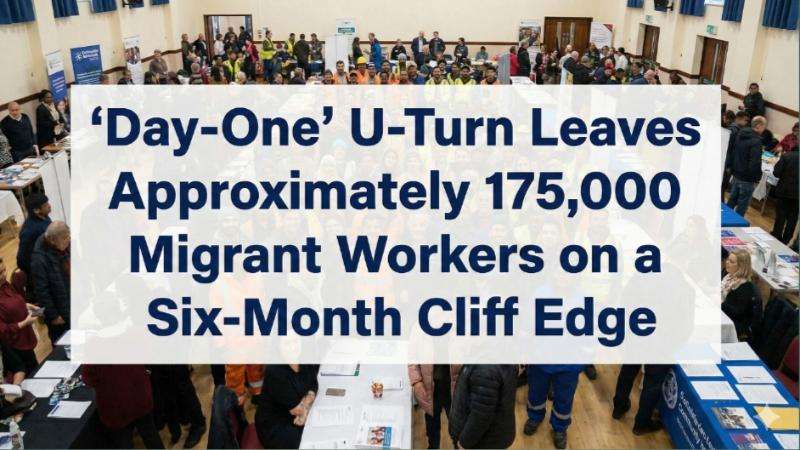
While business leaders have breathed a sigh of relief, citing the need for flexibility, the move creates a perilous legal vacuum for Britain’s newly arriving workforce. Analysis of the latest Home Office data reveals that approximately 175,000 migrant workers granted main applicant work visas in the last year now face a precarious "probationary trap." For these visa holders, the difference between "day-one rights" and a six-month wait is not merely a matter of job security—it is often a matter of remaining in the country.
The ‘Deportation Cliff’ for Skilled Workers-The Government’s pivot is being framed as a pragmatic compromise to ensure the Employment Rights Bill passes through the House of Lords. However, for the nearly 180,000 individuals entering the UK workforce annually on sponsored visas, this six-month probation period creates a unique mechanism of coercion. Unlike British citizens, who face unemployment if dismissed, migrant workers face the "curtailment" of their leave to remain.
Under current Home Office rules, a worker dismissed from their sponsored job typically has just 60 days to find a new sponsor or leave the UK. By stripping away the right to challenge an unfair dismissal during the first six months, the government has inadvertently handed unscrupulous employers a powerful tool. A migrant worker who complains about unpaid overtime, unsafe conditions, or harassment now faces a dismissal that they cannot legally challenge in a tribunal—a dismissal that immediately triggers a countdown to deportation.
Legal analysts argue this creates a "silencing effect" where migrant staff are forced to accept exploitative conditions during their probation to avoid the catastrophe of losing their visa. The six-month threshold effectively aligns with the period where workers are most desperate to prove their value, stripping them of leverage exactly when they are most vulnerable to abuse.
Seasonal Workers: A Legal Carve-Out-The situation is even starker for the labourers arriving on the Seasonal Worker visa, a route that saw over 38,000 grants in the last year alone and is capped at 45,000 for 2025. These visas are limited to six months by design. By setting the qualifying period for unfair dismissal rights at exactly six months, the Government has effectively carved this entire sector out of the legislation.
Seasonal workers in agriculture and poultry often face debt bondage and poor housing conditions, yet they will now have zero statutory recourse against unfair dismissal for the entire duration of their stay. If a seasonal worker is fired one week before their contract ends for "rocking the boat," they will have no legal standing to claim unfair dismissal, leaving them without wages and potentially stranded. This "loophole" ensures that the protections touted by Ministers will, in practice, never apply to the very people harvesting the nation’s food.
Why the U-Turn? The reversal follows intense behind-the-scenes lobbying from the Confederation of British Industry (CBI) and the Institute of Directors, who argued that day-one rights would freeze hiring and paralyze the economy. Business Secretary Peter Kyle and his department faced a legislative deadlock, with fears that the House of Lords would block the Bill entirely without concessions.
The "workable package" agreed upon keeps day-one rights for specific issues like discrimination and pregnancy, but the broader right to not be fired without cause is now delayed. The Department for Business and Trade insists this strikes a balance, offering clarity to employers while still improving on the previous two-year waiting period.
A Betrayal of the Manifesto? For unions and migrant advocacy groups, however, the compromise is a bitter pill. The original manifesto pledge was clear: "basic rights from day one." TUC General Secretary Paul Nowak has publicly urged peers to respect the mandate, but privately, union officials are concerned that the six-month delay entrenches a two-tier workforce.
By prioritizing the "confidence to hire" over immediate security, the Government has essentially sanctioned a six-month "try before you buy" period. For a local worker, this is a period of insecurity. For the 175,000 migrant workers arriving this year, it is a period of existential risk, where the power dynamic is overwhelmingly tilted in favor of the employer. As the Bill moves toward Royal Assent, the focus now shifts to whether secondary legislation can plug these gaps, or if the "New Deal" will leave Britain’s newest workers with the rawest deal of all.