

.jpg)


.svg)
Nation seems to be in a state of prolonged slumber. The faces of ordinary citizens on the streets reflect exhaustion, and their eyes carry deep uncertainty. Ineffective policies, uncontrolled price hikes, widespread corruption, and a lack of accountability have cast a shadow of discomfort over civic life. Yet those in power appear content, a curious mix of self-satisfaction, vanity, and submission defines their posture.
The unchecked rise in commodity prices has now reached such a point that the daily expenses of an average middle-class family have become nearly unmanageable. The cost of essential goods keeps increasing day by day, while income remains stagnant and unemployment continues to rise. Joblessness has taken on an alarming dimension, leaving a large segment of the young generation disoriented and directionless. Educated youths are increasingly losing faith in their future; many are consumed by the thought of leaving the country. This growing tendency is not a sign of health for any developing nation.
Like the economy, the administrative framework has become fragile. Corruption is no longer an anomaly, it has become a norm. The absence of transparency and accountability within government institutions has reached such depths that honest and capable officials now find themselves cornered. Under the dominance of partisan influence and personal interest, fairness and professionalism have all but disappeared from many sectors of public administration.
During Sheikh Hasina’s tenure, there was widespread criticism over enforced disappearances and extrajudicial killings. Yet, as in the past, similar allegations of torture and killings under the current interim government continue unabated. According to the latest report by human rights organization Odhikar, at least 40 extrajudicial killings have taken place across the country during this administration. The Human Rights Culture Foundation puts the figure even higher — at 60. However, the actual number may be greater still.
The culture of extrajudicial killings and custodial torture remains deeply entrenched. The law enforcement and security agencies have not yet emerged from this dark practice. Therefore, it cannot be said that the current interim government represents any real departure from its predecessor. There may have been a change in leadership, but the system itself remains unchanged, a situation that has turned the state into a source of fear rather than protection for its people.
The basic spirit of democracy, once the pride of this nation, has now become largely rhetorical. Public confidence in the electoral process has eroded, and the freedom of expression is increasingly constrained. The growing pressures on the press, attacks on journalists, and incidents of murder have created an atmosphere of fear. When truth-telling demands the price of one’s life, it marks not only the death of an individual but also the moral decay of society. Democracy cannot thrive where independent journalism is in peril. Though the constitution promises freedom of speech, in practice it has become alarmingly one-sided.
A section of civil society has grown fearful of speaking out; criticism is often perceived as hostility. This silence is no blessing, it slowly erodes the foundation of free thought. Behind every one of these failures lies the opportunistic politics of the BNP and Jamaat, whose pursuit of power has repeatedly thrown the country into turmoil. Since the recent change of power, at least 217 people have been killed under BNP’s watch and unofficial estimates suggest the number may be even higher. Even as the state teeters on the edge of dysfunction, these parties remain engrossed in their thirst for power. Neither can rise above personal and partisan interests to think for the nation. This is nothing short of political impoverishment.
On the other hand, despite the government’s loud rhetoric of development and progress, the gap between propaganda and reality grows wider each day. The beauty of statistics cannot conceal the daily hardships faced by ordinary citizens. Between the glittering slogans and the darkness of lived experience lies the cruel contradiction that defines today’s Bangladesh.
Yet despair is not the answer. What is needed now is introspection and awakening. Our history bears witness that in every time of crisis, this nation has risen from within. From the Language Movement to the Liberation War, and from the Liberation War to the July Uprising each defining chapter began with the people’s awakening. Once again, that call resounds today. We must cast aside indifference, fear, and complacency. Citizens must be reawakened with a renewed sense of duty and courage.
The government, for its part, would be wise not to dismiss the growing public discontent as mere noise. Development is not measured by infrastructure alone — it must ensure stability, security, and dignity in people’s lives. Political power derives its legitimacy only when it is sustained by public trust and consent. Therefore, the government must rebuild a culture of accountability and transparency, and instead of stifling free expression, it should encourage it. Leadership should not be defined by the fear of criticism, but by the courage to confront challenges and seek solutions.
At the same time, the responsibility of civil society is equally crucial. Change is never unilateral; it is born from collective consciousness. To witness injustice in silence is to become complicit in it. We must learn to speak the truth, to stand for justice. The youth must be inspired to question, to think, and to walk the path of change.
The nation must awaken today because every moment of delay pushes our future further into uncertainty and darkness. The time has come not for complacency, but for awakening; not for fear, but for courage.
Tomorrow, time may still remain but the opportunity may no longer exist.
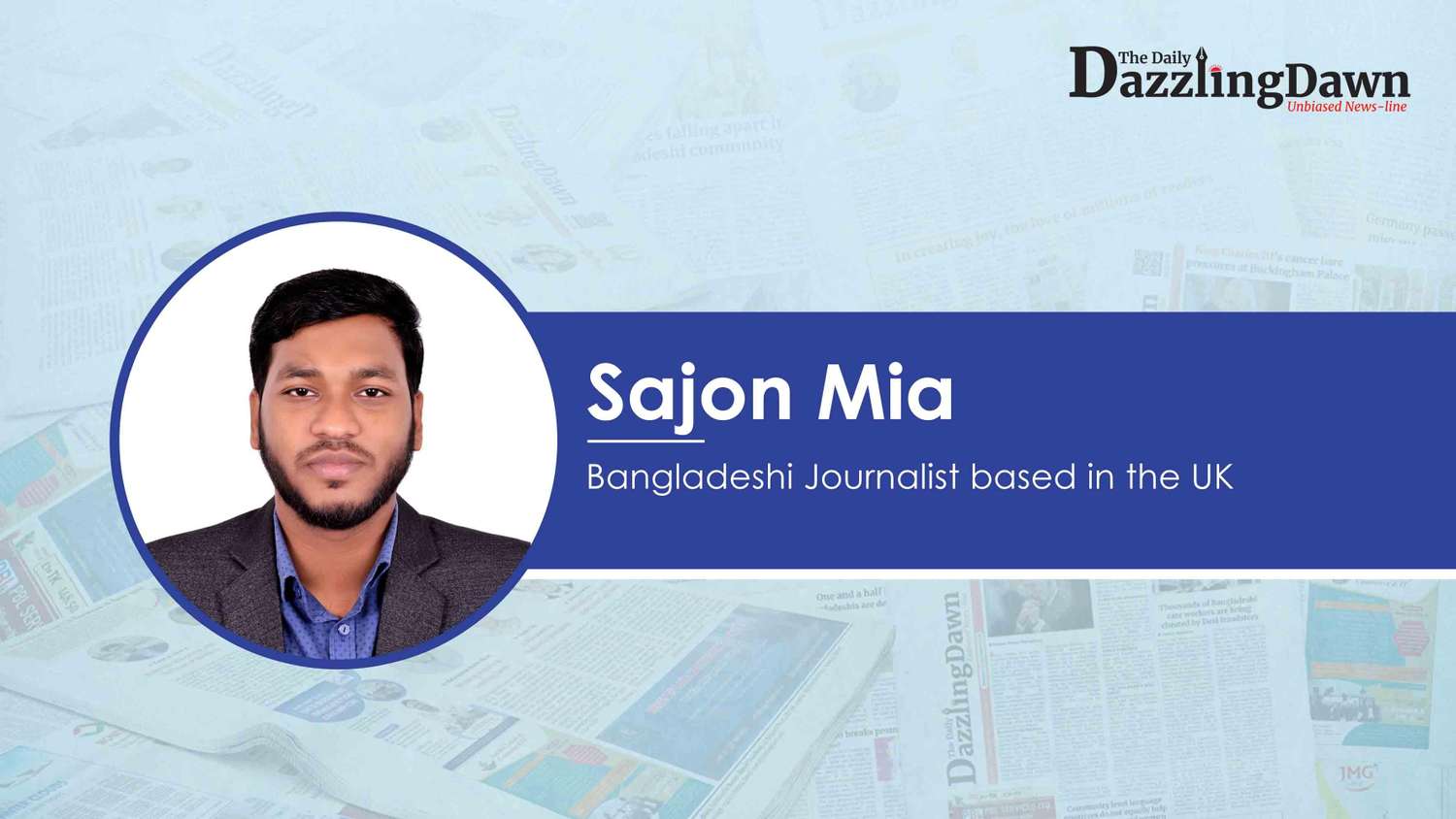
Author: Sajon Ahmed
Bangladeshi journalist based in the United Kingdom.
The opinion of the columnist is solely his own.