



.svg)
Large parts of South Africa came to a standstill on Tuesday as anti-immigrant demonstrations spread across the country, prompting businesses to close, workers to stay home and public transport services to be disrupted amid fears of escalating violence.
Many foreign nationals, particularly migrants from other African countries, avoided going to work, while thousands had already left their homes ahead of a protest-imposed "deadline" demanding that undocumented migrants leave South Africa.
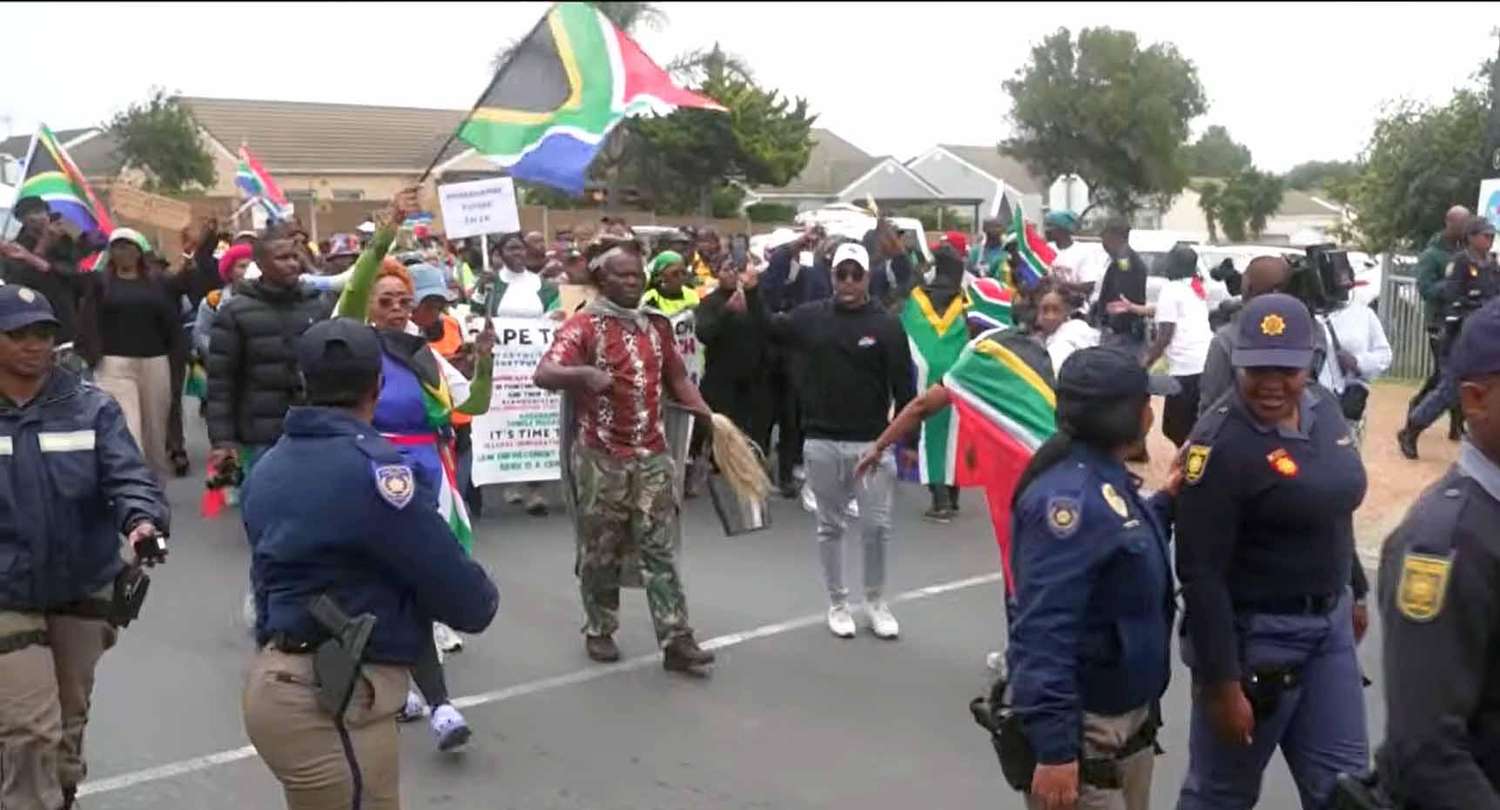
In major cities including Johannesburg and Durban, groups of demonstrators gathered carrying wooden sticks and chanting slogans against undocumented migrants. Protesters argued that illegal immigration was contributing to unemployment and worsening living conditions.
"People are not working because jobs are being taken by illegal foreigners. It's not fair," said 31-year-old protester Silindile Xaba during a demonstration in central Durban.
Violence and Displacement
The protests have heightened fears among migrant communities. Since demonstrations began in April, at least five people have been killed in related violence, while thousands of migrants have been displaced after attacks on their homes and businesses.
Human rights groups note that violence often targets migrants indiscriminately, regardless of whether they are legally residing in the country.
The protest movement, led by campaign group March and March, insists it does not encourage violence. Founder Jacinta Ngobese said the campaign seeks to pressure the government rather than promote attacks on migrants.
"We are trying to direct public frustration toward the government," Ngobese told Reuters earlier this month, adding that organisers could not control every community's actions.
Witnesses reported that landlords in Johannesburg and Durban had begun evicting foreign tenants out of fear that their properties could be targeted by protesters.
Mabako Majole, a representative of the Congolese community, said around 100 displaced migrants were sleeping outdoors in central Durban after being forced from their accommodation.
"These people all have legal documents, but they were still evicted," he said.
Heavy Security Presence
Authorities deployed thousands of police officers nationwide, while the military remained on standby under an emergency security budget of 600 million rand (approximately $36.6 million).
Deputy National Commissioner for Policing Tebello Mosikili said police had opened 103 criminal cases against anti-foreigner vigilante groups since March.
"The state has a responsibility to ensure that protests remain peaceful and within the law," she told reporters on Monday.
Political Debate Intensifies
The growing anti-immigrant movement has intensified political debate over illegal immigration and public safety.
President Cyril Ramaphosa acknowledged that many South Africans have genuine concerns about illegal immigration but stressed that protests must remain peaceful.
"Citizens' concerns about illegal immigration deserve to be heard," Ramaphosa said. "However, no one has the right to threaten, intimidate or commit acts of violence and vandalism."
Economic Frustration Behind the Protests
South Africa continues to struggle with deep economic inequality, slow growth and an unemployment rate of roughly one-third of the workforce, despite remaining Africa's largest economy.
Migrants are frequently accused of taking jobs, contributing to crime and placing additional pressure on public services. However, social scientists say there is little evidence supporting these claims.
According to Statistics South Africa (StatsSA), the country has an immigrant population of around three million people—about 4% of the total population, a relatively modest share by international standards.
The latest unrest has further damaged South Africa's reputation as a defender of human rights in the post-apartheid era and has raised concerns among neighbouring African countries over the safety of their citizens living in South Africa.