






.svg)
The Home Office faces a major statutory showdown over controversial proposals to alter enforcement measures for asylum-seeking families.
The government is facing an immediate constitutional and legal challenge following an extraordinary intervention from England’s independent children's watchdog over proposed immigration overhauls.
Dame Rachel de Souza, the Children’s Commissioner for England, has formally warned Home Secretary Shabana Mahmood that a series of aggressive new asylum rules could directly breach the Children Act 1989. The core of the dispute centres on proposals under consultation that would radically alter how the state treats families with refused asylum claims. Legal analysts speaking to Daily Dazzling Dawn indicate that if the Home Office proceeds with the policy, it will likely trigger immediate judicial review proceedings based on statutory duties that mandate the best interests of minors remain central to all state actions.
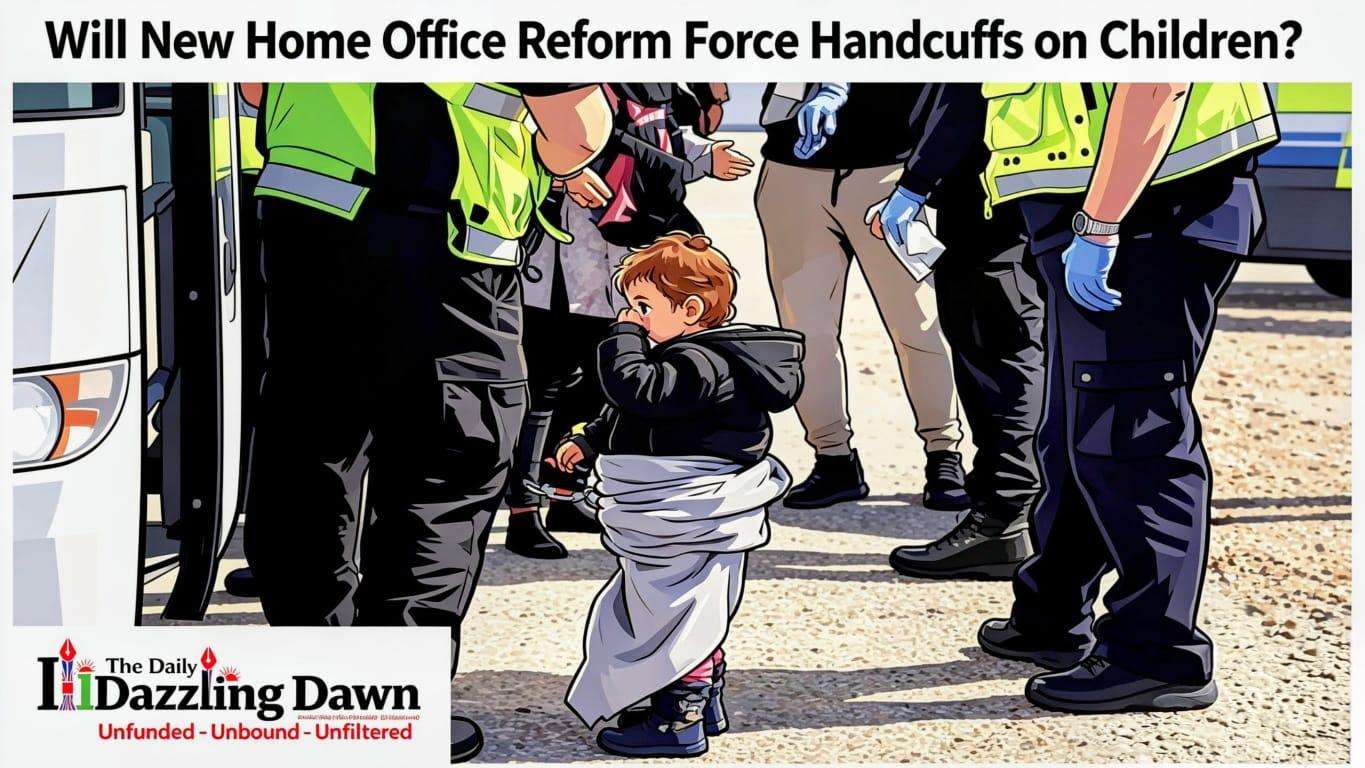
The proposed guidelines have introduced intense debate within Westminster by seeking views on cutting financial and housing support for families with a refused asylum application, reducing aid for adult care leavers, and explicitly legislating for physical interventions on minors during enforced removals. Among the provisions causing the most profound concern is a clause exploring whether immigration and detainee custody officers should be granted the right to use physical restraints, including handcuffs, on accompanied minors as an absolute last resort if a family fails to comply with deportation orders.
The policy framework represents a significant pivot by the Home Secretary to demonstrate institutional firmness on irregular migration, particularly amidst wider cabinet transitions following the dramatic resignation of Keir Starmer. In recent policy justifications, the Home Secretary warned that a failure to decisively manage the border framework risks fueling a darker, ethno-nationalist rhetoric across the political landscape, pointing directly to the electoral threat of the far-right.
However, the independent watchdog argues that the operational reality of these plans will systematically put vulnerable individuals in harm's way. Data models prepared by the Commissioner's office project that up to 27,000 children could be swept into destitution or subjected to physical force under the revised framework. In a formal submission made available to journalists, the Commissioner noted that despite multiple direct inquiries, administrative officials have been unable or unwilling to clarify the exact scope and domestic distribution of the minors who will be impacted by the changes.
Beyond the issue of physical restraint, medical and human rights campaigns are focusing heavily on clauses that would alter how health factors influence deportation. Under the draft guidelines, ongoing medical treatment or the absolute unavailability of specialized care in a country of origin would no longer be recognized as a genuine obstacle to removal. Families awaiting deportation would face the immediate withdrawal of accommodation and baseline subsistence funds unless they can conclusively prove total destitution.
The Home Office has floated a voluntary departure incentive offering up to £10,000 per family member, capped at four people, to encourage self-deportation. Yet the independent watchdog has maintained that allowing the termination of care or removing access to treatment remains entirely at odds with domestic child protection legislation. "I have a statutory duty to protect and promote the rights of children," the Commissioner stated to journalists, emphasizing that this mandate covers all children arriving in the country regardless of legal status. The next phase of the dispute will move to the parliamentary floor, where cross-party committees are expected to demand a full accounting of the human impact assessment before any code of practice is formally laid before Parliament.

.jpg)