


.svg)
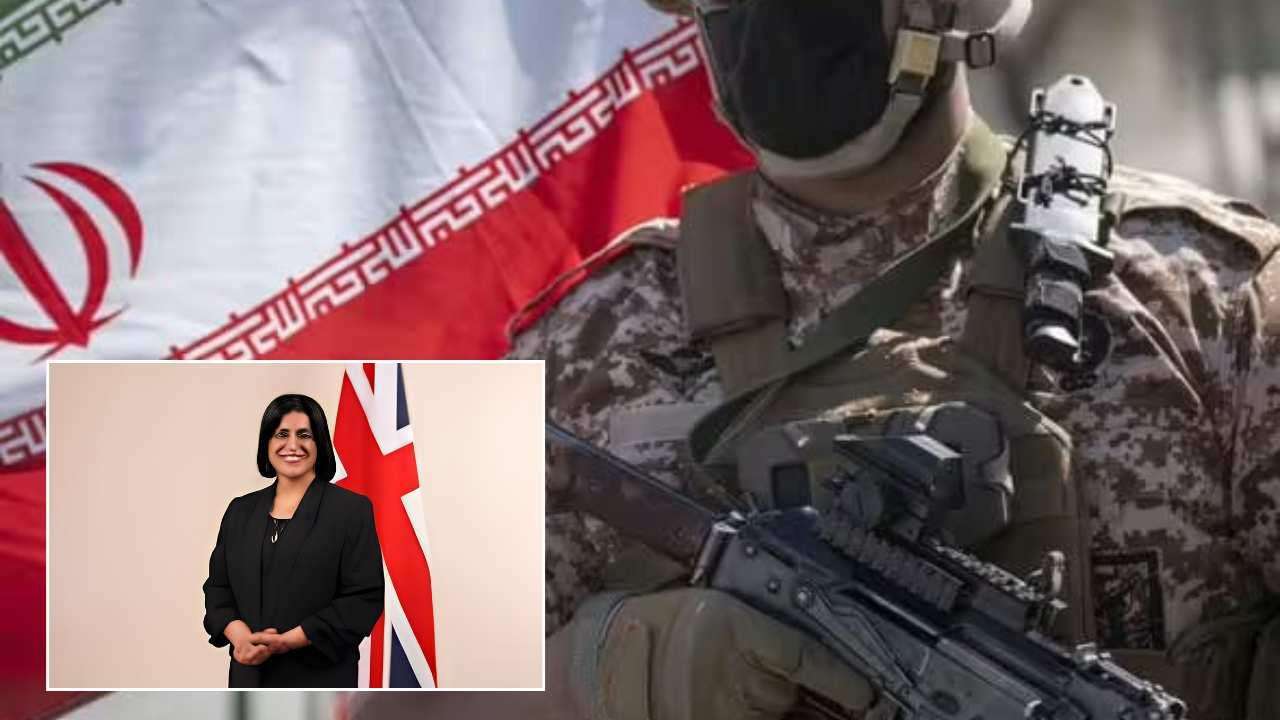
A highly coordinated financial pipeline linking European street gangs to a geopolitical shadow war has been exposed by intelligence officials, triggering a major British security crackdown against hostile state actors. The discovery comes just as Westminster prepares to hand sweeping new legislative authority to Home Secretary Shabana Mahmood to directly target foreign intelligence operations—most notably Iran's Islamic Revolutionary Guard Corps (IRGC) and Russian state networks—that are accused of causing chaos on the streets of Britain.
While public attention remains focused on the impending state-threat proscription list, international counter-terrorism investigators are quietly piecing together the true mechanics of these operations. The network utilizes dormant, obscure digital front brands—specifically an Islamist group with suspected Iranian links operating under the alias Harakat Ashab al-Yamin al-Islamia—to deliberately obscure its operational tracks and claim responsibility for targeted strikes.
The strategy relies heavily on a decentralized, layered command structure. Western security analysts note that the operational footprint of these hostile entities is kept intentionally light. By recruiting low-level local criminals and organized crime groups over encrypted messaging apps like Telegram, foreign coordinators establish multiple layers of separation. This system ensures that the street-level actors carrying out physical strikes remain entirely unaware of the ultimate state source of their funding, providing the foreign intelligence agencies with plausible deniability.
This hybrid threat model mirrors deniable sabotage tactics used across Europe, marked by a recent wave of arson attacks, kidnap conspiracies, and assassination attempts. Over the past year, MI5 has tracked a 35% spike in hostile state-threat activity on British soil, including ordered firebomb attacks on synagogues, Jewish community infrastructure, and targeted journalists.
Data obtained by international investigators highlights how this state-sponsored subcontracting network has systematically scaled its operations across Western Europe since early spring. The campaign began in early March with an improvised explosive attack targeting synagogue infrastructure in Liège, Belgium. By mid-March, the operational focus shifted to community centers and schools in Rotterdam and Amsterdam, where hostile actors deployed arson and explosives.
The pipeline hit British soil in late March when an accelerated firebombing campaign specifically targeted Hatzola community ambulances in North London. This geographic expansion continued into April and May, with intelligence services intercepting attempted bombings aimed at Western financial institutions in both Paris and Skopje, revealing the sweeping pan-European nature of the proxy network.
The core vulnerability targeted by these foreign entities has long been the UK's legal framework. Historically, unless an asset or individual could be directly linked to an explicitly banned international terrorist group under the Terrorism Act 2000, prosecutors had to treat the incidents as standard localized crimes, such as criminal damage or basic domestic arson.
"Foreign states are becoming ever more aggressive – attacking our communities, our way of life, and our institutions – and hiding their tracks behind proxies," Home Secretary Shabana Mahmood told journalists. "We must adapt to keep pace. Our world-leading police and intelligence agencies do remarkable work every day to keep this country safe, and they will always have the government’s fullest support. That is why we are equipping them with stronger tools to take down these evolving threats wherever they occur. These new powers should send a clear message to anyone doing the dirty work of a foreign state – we will come after you and you will face the full force of the law."
The upcoming legal changes, expected to come into force next month, will fundamentally alter this dynamic. By introducing a dedicated state-threat proscription power, the government can designate up to 10 hostile organisations as "state-based threats" over the next year. This shift allows MI5 and counter-terrorism police to freeze assets, allow the Home Secretary to cancel visas of foreign nationals linked to the groups, force social media companies to take down propaganda, and arrest zealots who express support for them in the same way they target supporters of ISIS or Al-Qaeda.
The financial transactions fueling these operations are surprisingly small, with foreign spies offering petty criminals cash and protection to act as their foot-soldiers. Gang members and vulnerable individuals are often recruited via public social media boards and encrypted apps for nominal payouts, completely unaware that their actions serve a broader foreign intelligence agenda.
"The recent wave of antisemitic attacks has shocked the nation and left British Jews feeling unsafe in their own communities," the Prime Minister told journalists. "That cannot stand. Where foreign states are found to be engaging in activity that threatens lives or undermines our democratic institutions, we must ensure that such actions have consequences. We will not tolerate hostile actors paying petty criminals to do their dirty work."
Security officials are planning to launch specialized covert and overt communications campaigns inside British prisons to counter these operations. Intelligence teams will directly warn inmates against the hollow promises of cash and protection originating from Moscow, Tehran, and Beijing. Under the new laws, accepting payment from a designated hostile organisation will carry an automatic 14-year maximum prison sentence—a penalty far harsher than if the criminal carried out the same act of property damage without foreign orders. Officials believe this severe legal penalty will successfully deter local criminals from selling their services to foreign adversaries.