





.svg)
The recent national offensive against organized crime has unmasked a fundamental shift in the nation's criminal architecture, moving far beyond the headline-grabbing seizure of 24-carat gold bars and luxury suitcases. While authorities confirmed over 2,180 arrests and the dismantling of 335 drug lines between March 2 and March 8, 2026, the real story lies in the "localization" of the trade—a strategic retreat from cross-border travel to evade the very surveillance that once defined the "County Lines" model.
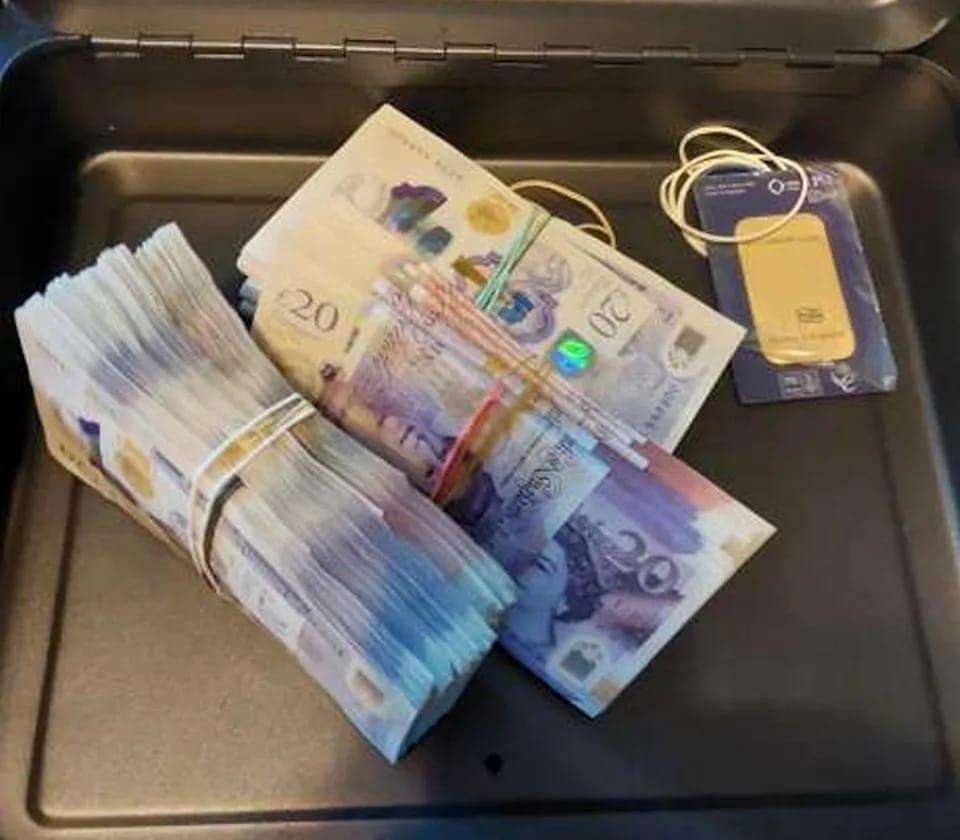
The discovery of a pure gold bar in Maidstone, valued at approximately £13,000, and even gold teeth in other raids, serves as a trophy of a new era of "bragging rights." Criminal networks are increasingly converting volatile cash into stable, portable assets to hedge against police intervention. However, the socio-economic landscape of these arrests reveals a deeper complexity. National County Lines Coordination Centre (NCLCC) data suggests that British South Asian communities—specifically those of Pakistani and Bangladeshi heritage—often represent a significant demographic within urban "exporter" hubs like London, Birmingham, and Manchester. In these regions, young men from these backgrounds are frequently targeted for "middle-management" roles, managing the logistics of the phone lines while staying insulated from the high-risk "running" performed by younger children.
The most urgent development is not what was found, but how it was recruited. Authorities have highlighted a chilling trend: the "professionalization" of grooming on platforms like Snapchat. Gangs are no longer just using threats; they are using "job applications" and digital storefronts to entice children as young as 14 with the promise of designer lifestyle perks. Of the 1,348 people safeguarded during this specific week, nearly 800 were children, including over 250 girls, highlighting that the gender gap in criminal exploitation is rapidly closing.
Looking ahead, the landscape of British justice is currently undergoing its most significant change in decades. The Crime and Policing Bill 2025 is set to reach full implementation by late 2026, introducing a standalone criminal offense for "cuckooing"—the practice of taking over a vulnerable person's home. This shift moves the legal focus from simple drug possession to the more serious charge of modern slavery, carrying sentences of up to five years. Furthermore, a new "Child Criminal Exploitation" (CCE) offense will target adults who use children for crime, carrying a 10-year maximum penalty. This upcoming legal framework aims to treat the hundreds of youth swept up in these crackdowns not as perpetrators, but as victims of a system that has moved its operations from the motorway directly into the neighborhood.
The shift toward "internal lines"—where drugs are sold within the same county they are processed—means that the next phase of policing will rely less on highway patrols and more on community-level cyber-intelligence and the monitoring of digital "lifestyle" influencers who serve as recruiters for these invisible empires.