


.svg)
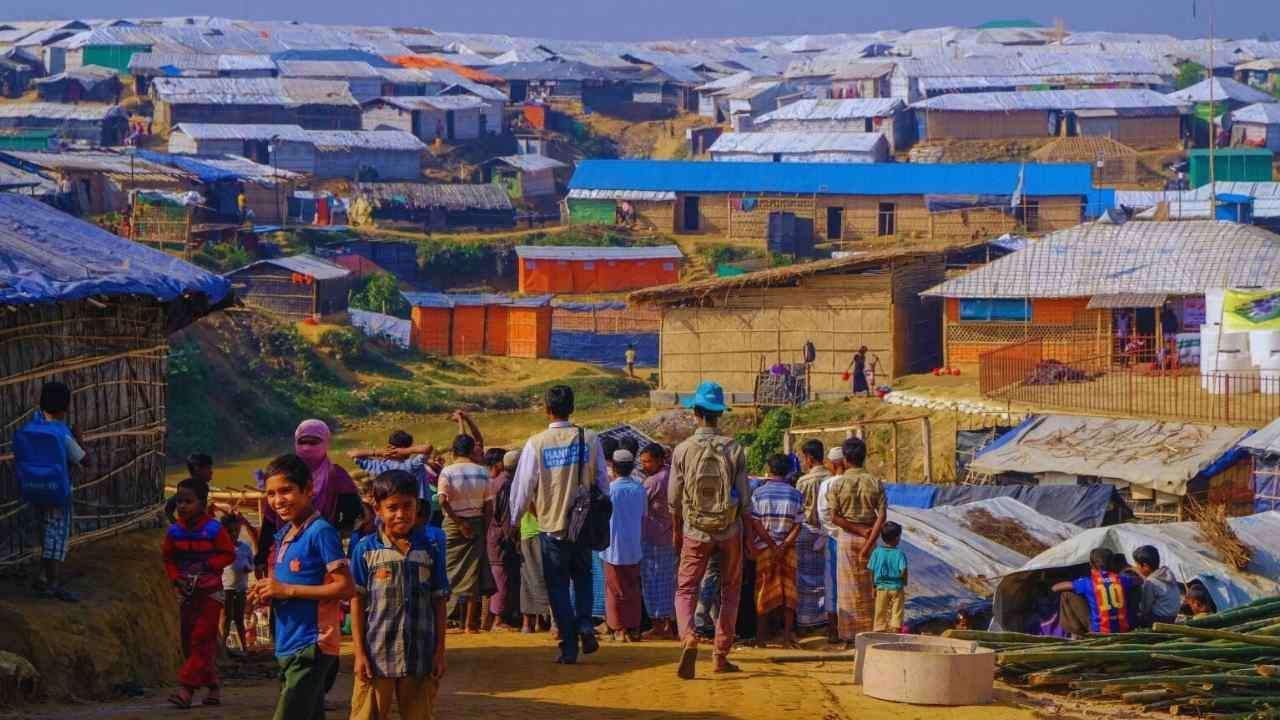
On a Thursday afternoon, 19-year-old Mahmudul Hasan arranged mats on the floor of his fragile bamboo-and-plastic shelter inside the Balukhali Rohingya refugee camp. Soon after, around 35 small children gathered around him. Though still a teenager himself, Hasan is their teacher.
The children greeted him warmly in the Rakhine language: “Sayar, Nay Kaung Lar?” (“Sir, how are you?”). They are part of nearly 80 students enrolled at a small, community-run school where Hasan teaches Burmese, English, and mathematics.
Alaska Plane Crash Kills All
Just a short distance away, however, a very different lesson was being broadcast. Riding through the camp on a motorcycle, a Bangladeshi government official used a loudspeaker to announce instructions related to the country’s February 12 national elections.
Between February 9 and 13, the official warned refugees to keep their shops closed and remain inside the camp. He cautioned that anyone involved in political activities would face “serious punishment,” including the loss of their refugee registration cards and documents required to receive subsidised food rations.
The refugee camps in Cox’s Bazar shelter more than one million Rohingya who fled Myanmar in 2017 after a brutal military campaign. While Bangladesh, under former Prime Minister Sheikh Hasina, provided refuge when many countries turned them away, the election-time warnings highlighted the refugees’ uncertain status. Their lives remain defined by restrictions — limited education, healthcare, employment, food supplies, and freedom of movement.
As Bangladesh’s 127 million citizens prepare to vote, Rohingya refugees like Hasan know they have no real stake in the process.
“I don’t expect anything new,” Hasan told Al Jazeera. “I just want to live with dignity and basic human rights. This life in Bangladesh was never my choice.”
Still, he admitted that leaders from the two major political alliances — led by the Bangladesh Nationalist Party (BNP) and Jamaat-e-Islami — have spoken about Rohingya concerns in areas like Ukhia and Teknaf, where the camps are located. That, he said, gives him a small sense of hope.
A life on the margins
Hasan arrived in Bangladesh with his family at the age of 10 during the mass exodus of 2017. In Myanmar, the Rohingya are denied citizenship, and the violence against them is now under international scrutiny. The International Court of Justice is investigating the atrocities as possible genocide, and in November 2024, the International Criminal Court issued an arrest warrant for Myanmar’s military chief, Min Aung Hlaing, over crimes committed against the Rohingya.
Today, Bangladesh hosts the largest Rohingya refugee population in the world.
Nay San Lwin, a Rohingya diaspora leader and co-chair of the Arakan Rohingya National Council, said the community remains grateful to Bangladesh but criticised the government’s policy of non-integration. Barbed-wire fences surround the camps, and Rohingya children are barred from Bangladesh’s formal education system.
“The next elected government should improve living conditions, education, healthcare, and livelihoods, and promote better relations between refugees and host communities,” he said.
But achieving this is increasingly difficult. International aid — mainly from the UN and global donors — has declined, worsening conditions in the camps.
“The humanitarian crisis is deepening due to insecurity, funding shortages, lack of education, and uncertainty,” said Sayed Ullah, president of the United Council of the Rohingya.
Hafez Ahmed, a 64-year-old shopkeeper, said healthcare has deteriorated. “We only get basic medicines. For serious illnesses, we’re told to go to private hospitals, but we can’t afford it,” he said. “Food rations are also shrinking. It’s not enough.”
For young people like Hasan, life in the camp has crushed many dreams.
“Camp life is traumatic — it feels like prison,” he said. “I wanted to become a world-class teacher, but what future do I have?”
Risky escapes and rising resentment
Growing frustration has pushed many Rohingya to attempt dangerous journeys out of Bangladesh. In a joint statement last November, UNHCR and the International Organization for Migration reported that over 5,300 Rohingya attempted perilous sea crossings in 2025, with more than 600 reported dead or missing.
Bibi Khadija, 23, was one of them. Hoping for a better life in Malaysia, she and her three-year-old son were detained by traffickers before escaping. When she sought help at a local market while trying to return to the camp, she said people beat her, accusing Rohingya of causing problems. Eventually, a stranger gave her money to get home.
Experts say Rohingya refugees are caught in a difficult narrative — seen both as victims of genocide and as a burden blamed for crime and pressure on local resources.
Politics and uncertainty
In August 2024, Sheikh Hasina fled to India following a massive student-led uprising. She was later sentenced to death in absentia for a violent crackdown that killed more than 1,400 protesters. Nobel laureate Muhammad Yunus now heads an interim government ahead of the February 12 elections.
Both BNP and Jamaat-e-Islami have addressed the Rohingya issue during campaigning. BNP leaders say repatriation with citizenship rights is a top priority, citing successful returns during the 1990s. Jamaat leaders say they are reviewing policy proposals and want regional powers like China and India to play a stronger role.
However, analysts argue the Rohingya crisis is not a central election issue. Tanvir Habib of Dhaka University said the next government must work with global and regional partners to ensure continued support for refugees.
Human rights groups warn against reducing the issue to repatriation alone. “Repatriation cannot be the only political solution,” said John Quinley of Fortify Rights. “The Myanmar military is still committing genocide.”
Meanwhile, resentment is growing among some Bangladeshis. Residents near the camps blame Rohingya refugees for job competition and crime, including trafficking. Former diplomat Major General Shahidul Haque said public frustration is increasing and that many expect the next government to resolve the crisis.
A single hope
What that resolution will be remains uncertain. But inside the camp, shopkeeper Hafez Ahmed is clear about his wish.
“I want to go back to my homeland with rights,” he said. “I want to die in my own country.”

.jpg)