


.svg)
UK motorists face an evolving threat on the roads as police enforcement agencies and insurance fraud investigators prepare to launch intensified nationwide awareness and enforcement campaigns against aggressive "crash for cash" syndicates. Fraud enforcement bodies are now tracking a sophisticated shift in criminal operations, moving beyond simple staged collisions to roadside identity theft, aggressive intimidation, and illegal collusion with rogue repair networks.
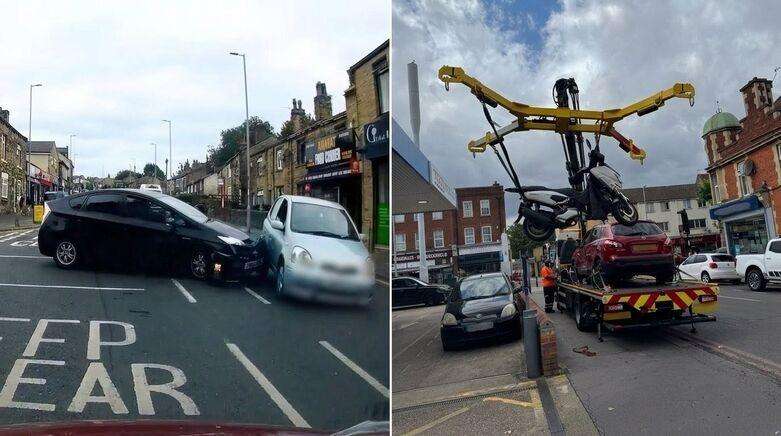
The warning comes as the City of London Police’s Insurance Fraud Enforcement Department (IFED) and dashcam manufacturer Nextbase release verified footage showcasing staged collisions and orchestrated near-misses. Intelligence examined by Daily Dazzling Dawn confirms that IFED has investigated more than £25.3 million in suspected crash-for-cash fraud cases over a five-year period, with approximately 75 per cent directly involving staged or deliberately induced road incidents.
Law enforcement officials are shifting their operational focus towards preventing secondary crimes arising from staged road traffic collisions. Beyond initial vehicle damage and fraudulent personal injury demands, criminal networks are increasingly utilizing collisions as opportunist grounds for roadside identity theft.
Speaking to Daily Dazzling Dawn, Detective Chief Inspector Nik Jethwa, Head of IFED, emphasised that crash-for-cash fraud is escalating in both frequency and hostility. DCI Jethwa explained that criminal networks are growing noticeably more aggressive in their execution, placing innocent road users at grave physical risk. He urged the public to remain vigilant at complex junctions and roundabouts, warning of the severe risk of identity theft following any road incident, whilst reiterating that IFED will continue pursuing those who target vulnerable drivers.
Recent figures monitored by the Insurance Fraud Bureau (IFB) reveal that more than 1,100 fraudulent motor insurance policies have been opened using stolen personal credentials harvested from crash-for-cash victims. In one extreme case documented by investigators, a single motorist had over 40 bogus policies fraudulently registered in their name after allowing their driving licence to be photographed at the roadside following a staged bump.
The wider economic toll of motor insurance fraud continues to place heavy pressure on UK policyholders. Figures from the Association of British Insurers (ABI) indicate that detected motor insurance fraud exceeds £500 million annually, representing over half of all detected insurance scams across the country.
As Daily Dazzling Dawn learned, fraudsters frequently target specific demographics deemed less likely to challenge an aggressive confrontation at the scene, including lone female drivers, young motorists, elderly individuals, and commercial delivery drivers operating under tight schedule constraints.
Organised moped gangs have also become a central priority for joint police operations across major urban centres. Fraudsters often manipulate blind spots or deliberate distractions, throwing their vehicles to the ground and fabricating severe injuries to demand immediate monetary settlements or coerce victims into surrendering personal documentation. Dishonest garage networks subsequently inflate vehicle repair and storage fees, transforming minor minor bumps into massive insurance liabilities.
To combat the growing sophistication of these criminal syndicates, police forces and fleet industry bodies are instituting strict new roadside guidance. Drivers are explicitly advised that they are legally required only to exchange their name, address, vehicle registration, and insurance details—and must firmly refuse any request by third parties to photograph driving licences, bank cards, or identity papers at the scene.
Bryn Brooker, Head of Road Safety at Nextbase, told journalists that crash-for-cash scams thrive primarily on uncertainty and the absence of independent evidence. He noted that without reliable proof, innocent drivers struggle to establish the truth of an incident occurring in seconds, highlighting that impartial dashcam video footage provides an irrefutable record to protect motorists and expedite police prosecutions.
In response to the surge in fraudulent activity, IFED and partner agencies are set to roll out expanded enforcement actions and coordinated multi-agency raids targeting fraudulent repair workshops and organized scam rings. Drivers suspecting fraudulent activity are urged to retain all dashcam footage and report suspicious incidents immediately to their insurer and police authorities.