.jpg)






.svg)
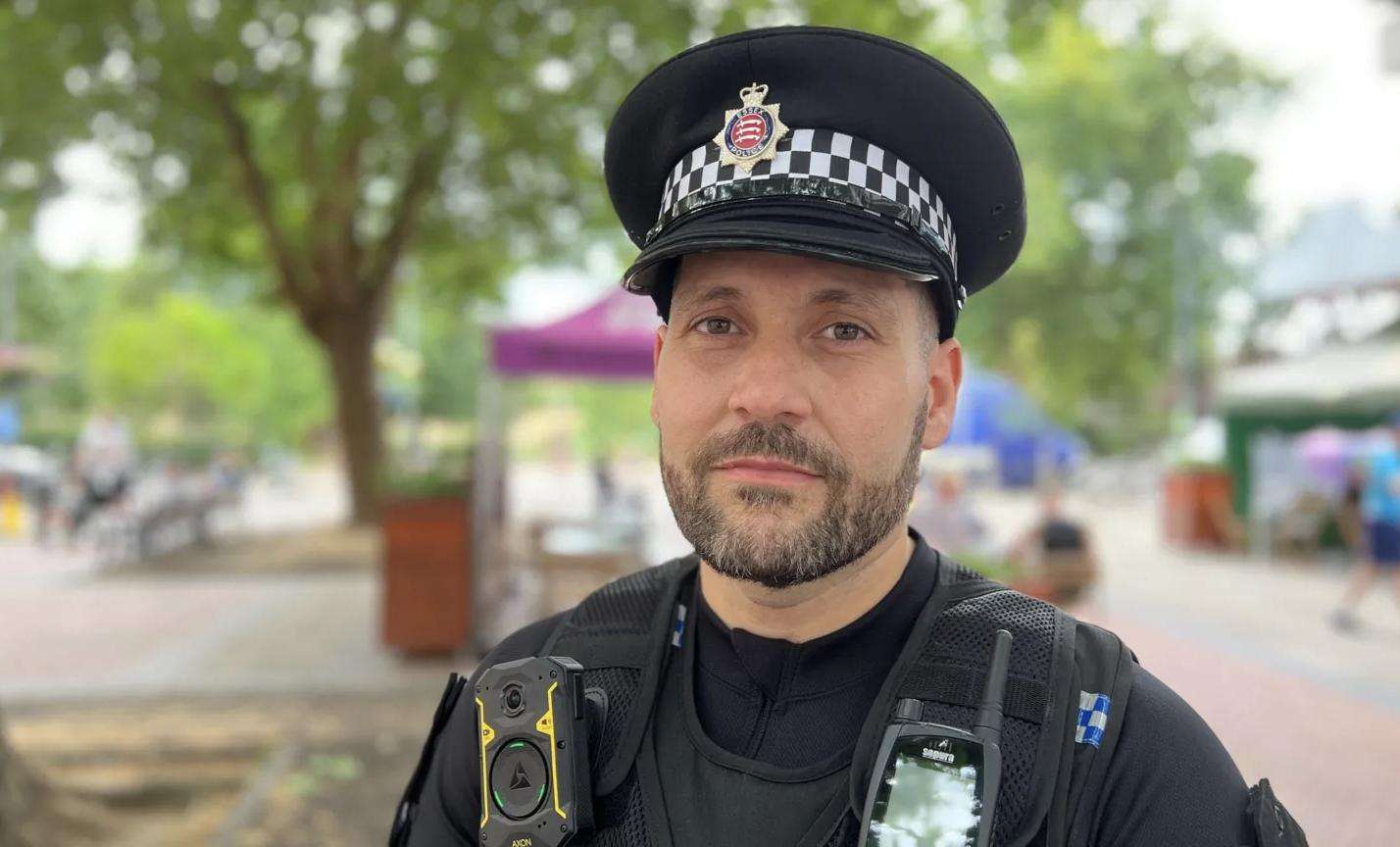
Essex Police have stepped up patrols across key crime and anti-social behaviour (ASB) hotspots in Chelmsford this summer as part of an ongoing effort to deter offending, improve public safety, and reassure residents.
According to the force, officers are carrying out targeted daily patrols in locations identified through intelligence on violent crime, live incidents, and anti-social behaviour. Police say the strategy has contributed to a 15% reduction in serious knife crime over the past 12 months.
Chief Inspector Aaron Homatopoulos, who oversees policing in Chelmsford city centre, said patrols are being focused on areas where they can have the greatest impact.
“We’ve identified hotspots based on violent crime, live crime and anti-social behaviour, and we’re conducting patrols every day at key times to maintain a visible police presence,” he said.
Despite the fall in knife crime, official Essex Police performance data shows reports of anti-social behaviour in Chelmsford have increased by 32% over the past year. However, the force said the rise is partly due to more accurate recording of incidents rather than a significant increase in offending.
During a recent patrol in the city centre, officers arrested a man near Chelmsford railway station for allegedly breaching a Criminal Behaviour Order (CBO) after he was recognised by an off-duty police officer.
CBOs are designed to tackle persistent anti-social behaviour by placing legal restrictions on offenders, such as banning them from entering certain locations or consuming alcohol in public spaces.
Essex Police continue to work closely with Chelmsford City Council through a long-established community safety partnership aimed at preventing crime and responding quickly to incidents.
The council operates around 600 CCTV cameras across the borough, monitored around the clock from its control centre. Police said CCTV operators recently helped identify footage showing a suspect allegedly stealing from a local supermarket.
Spencer Clarke, Chelmsford City Council’s Public Protection Manager, said the surveillance network plays a much broader role than simply identifying offenders.
“It’s not just about catching criminals. It’s about protecting the public, helping locate missing people, and ensuring residents feel safe in the city,” he said.
Clarke added that the council and police have shared the same community safety hub for the past seven years, allowing both organisations to respond more efficiently to incidents.
Elsewhere during the patrol, officers stopped a rider using a private electric scooter illegally in the city centre. Under current UK law, privately owned e-scooters cannot be ridden on public roads or pavements. Only rental scooters operated through approved schemes—such as Chelmsford’s Voi rental service—are permitted in designated areas.
Police seized the scooter, which is expected to be destroyed, while the rider could face a fine or court proceedings.
Chief Inspector Homatopoulos acknowledged that although Chelmsford remains a relatively safe city, some residents remain concerned about crime levels.
“Chelmsford is a safe city and the city centre is safe, but we understand people’s concerns. That’s why we’ve increased patrols over the coming months to provide reassurance and prevent crime,” he said.
Later in the day, officers visited a park identified as a hotspot for drug-related activity. There they stopped and searched a teenage boy after detecting the smell of cannabis. Following further inquiries, officers said the situation appeared more complex than simple drug possession, suggesting the teenager could potentially be vulnerable or exploited by others.
Clarke noted that while crime can rise during the busy summer period, Chelmsford faces many of the same policing challenges as other towns and cities across the UK. Police say their combination of targeted patrols, partnership working, and intelligence-led policing will remain central to keeping communities safe throughout the summer.




.jpeg)