





.svg)
Home Secretary Shabana Mahmood’s landmark blueprint to overhaul the UK’s asylum system faces intense scrutiny, as critics warn that the government’s new "Canada-inspired" community and university sponsorship pathways risk replicating a regulatory nightmare that recently brought Canada's own immigration framework to a standstill. The Home Office announced that the upcoming Immigration and Asylum Bill will tighten the legal definition of "family" under the European Convention on Human Rights (ECHR) to strip out loopholes used by foreign criminals to block deportations. However, independent policy analysts argue that while the Home Secretary closes one loophole, she is simultaneously opening a massive backdoor by copying a Canadian model riddled with systemic abuse and corruption.
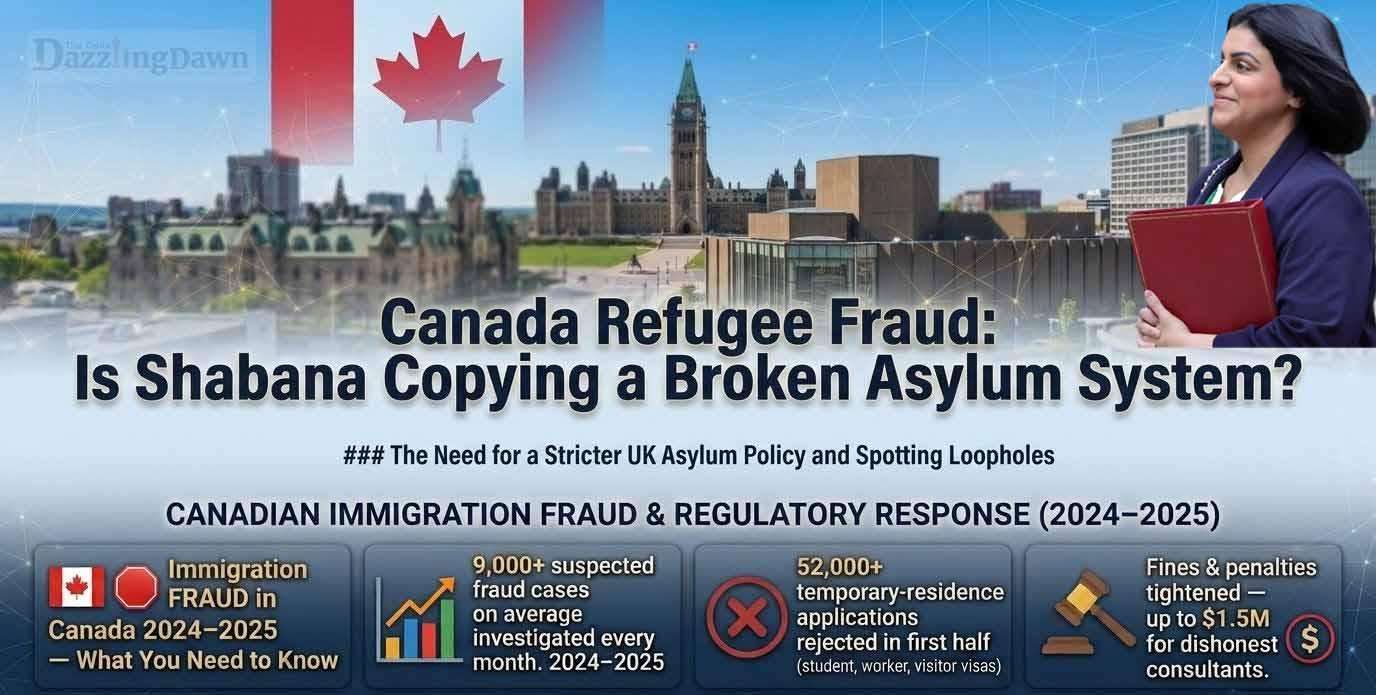
While Canada’s Private Sponsorship of Refugees program has historically been praised as a humanitarian triumph, it has exposed severe, systemic vulnerabilities that forced the Canadian government to issue a dramatic multi-month total freeze on certain private community sponsorships, specifically Groups of Five and community organizations. Unscrupulous immigration consultants exploited regulatory loopholes by charging vulnerable individuals thousands of dollars to file unfounded or fraudulent refugee claims under the guise of community sponsorship, turning a humanitarian program into a lucrative, predatory "pay-to-enter" black market. Furthermore, the sheer volume of applications far outstripped government processing capacity, creating a staggering backlog that forced the total pause on new applications to prevent the entire immigration framework from collapsing. This decentralized model also became a de facto secondary pathway for recent immigrants to sponsor extended family members such as cousins, uncles, and nephews, effectively bypassing Canada’s strict caps on standard family visas instead of prioritizing the world’s most vulnerable, UNHCR-vetted refugees. Government investigations in Canada further revealed widespread cases of sponsorship breakdown, where private sponsors failed to provide the required twelve months of housing and financial support, and in worse cases of financial exploitation, refugees were coerced into secretly returning their stipend money back to their sponsors or paying for their own arrivals.
These Canadian warning signs present direct risk factors for the impending UK model, where local communities, employers, and "trusted" universities will be granted the authority to sponsor foreign nationals with the aim of operating at a much higher capacity than previous schemes. Critics stress that UK asylum policy must be significantly stricter, warning that the Home Office cannot rely on corporate goodwill or university staff to execute border-force level vetting when the existing state asylum infrastructure is already overwhelmed. Paid scams filing bogus claims in Canada expose how low barriers for "trusted" UK entities could face immediate exploitation, creating a deep policy disconnect that directly undermines the government's pledge to smash the smuggling gangs.
The bottom line is that for the UK system to survive public scrutiny, it must spot these exact legal and financial loopholes before launching this autumn. Without mandating strict criminal background checks for private sponsors, enforcing severe penalties for financial coercion, and capping absolute numbers, the UK risks replacing its small-boat crisis with a heavily backlogged, privately subverted legal asylum crisis.