





.svg)
An initial emergency call at 10:23 am on Wednesday triggered a multi-station response to a rapidly developing residential fire on Warwick Road in Sutton.
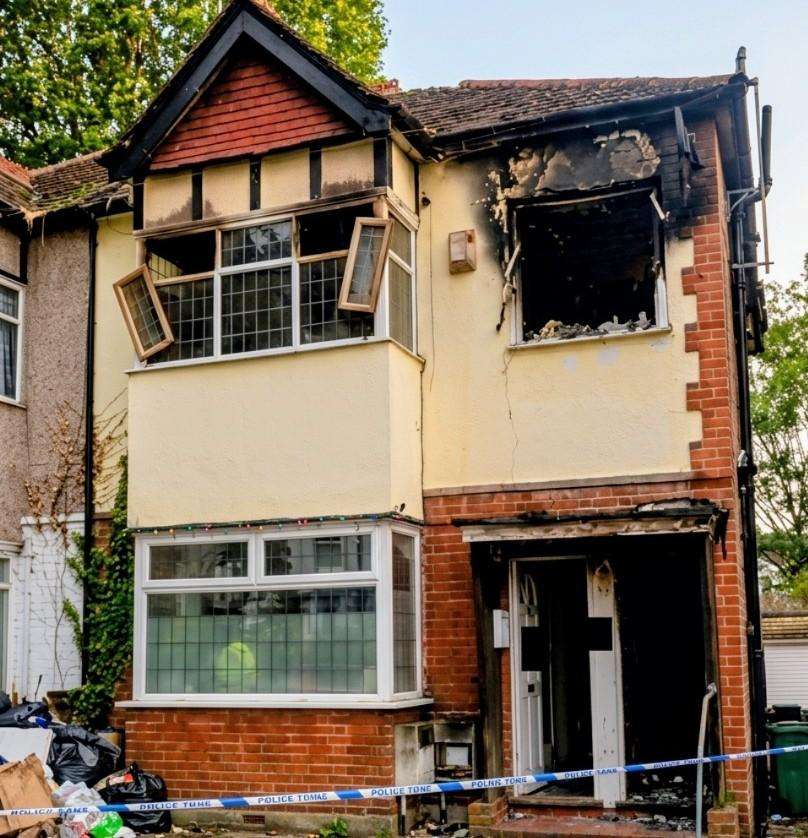
Four fire appliances and approximately 25 firefighters deployed from Mitcham, Sutton, Croydon, and Clapham stations arrived to find the first floor of a converted semi-detached house heavily involved. The velocity of the fire necessitated the deployment of a 32-metre turntable ladder, utilized mechanically as an elevated water tower to combat the spread from height. It required more than two hours of continuous tactical operations to bring the environment under control.
The structural consequences were severe, resulting in the absolute destruction of a first-floor flat and considerable thermal degradation to the integrated loft space. A deeper forensic analysis by the Daily Dazzling Dawn into the regional demographics of Sutton reveals a notable density of South Asian municipal residents, particularly within the borough's multi-occupancy rental sector. While official identification of the displaced individuals has not yet been formally verified by emergency services, the incident has intensified scrutiny regarding the safety of high-density housing configurations often utilized by working-class and immigrant communities.
Investigations focus directly on the catastrophic failure of an electric scooter's lithium-ion battery pack. Witnesses recalled hearing an abrupt acoustic detonation originating from the upper level immediately preceding the visibility of smoke.
Because the charging device had been positioned contextually within a primary thoroughfare, the subsequent thermal runaway event generated an immediate barrier of flame across the central corridor. This physical blockage completely compromised the primary escape route, straddling the residents inside.
The fire blocked their main escape route, preventing them from using the stairs to exit the flat," an emergency spokesperson told journalists at the scene. "As a result, they were forced to evacuate the building through a window.
The London Ambulance Service treated three occupants at the scene before transferring them to a nearby hospital for specialized assessment. While their precise clinical prognoses remain confidential, medical interventions primarily addressed smoke inhalation and trauma suffered during the emergency window egress.
The incident adds momentum to cross-party political demands for stringent domestic micro-mobility legislation. Safety advocates are increasingly analogizing consumer lithium-ion batteries to commercial pyrotechnics, arguing that unregulated online supply chains allow sub-standard electronics into domestic spaces without adequate quality assurance.
Emergency services continue to warn consumers against using third-party charging hardware or executing unverified home conversions on standard bicycles. Current statistical models indicate that emergency crews across the capital face an active lithium-ion battery fire roughly every 48 hours, highlighting a persistent systemic risk.
Legal specialists note that ongoing investigations into the exact manufacturing origins of the failed Sutton battery pack will remain strictly tethered to the truth to preserve the integrity of future consumer protection proceedings. Meanwhile, local authority housing teams face the immediate task of securing alternative accommodation for the displaced occupants as the structural stability of the Warwick Road building is reassessed.