






.svg)
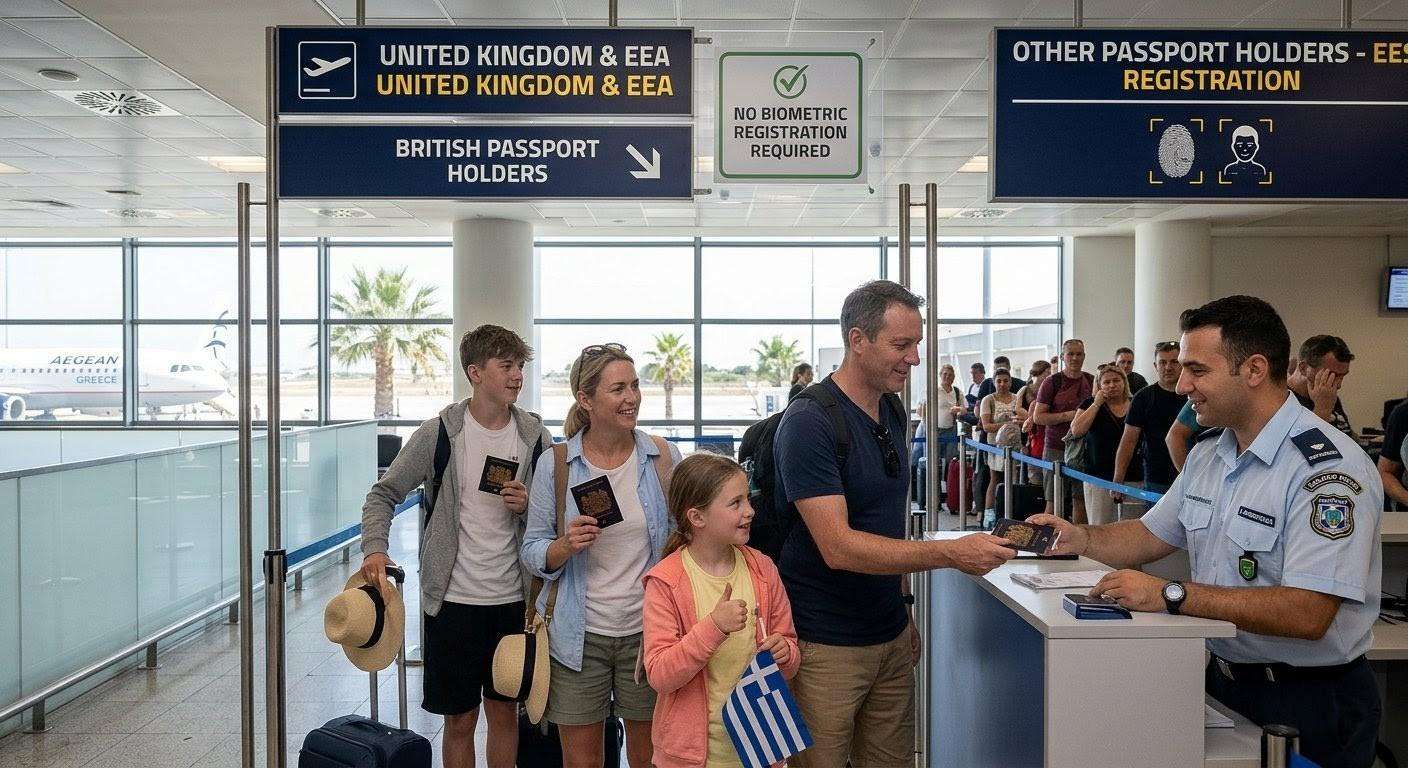
Greece has confirmed that British passport holders are now exempt from the European Union’s mandatory biometric registration, effectively creating a "fast-track" corridor for UK arrivals this summer. The decision marks a significant departure from the bloc’s newly operational Entry-Exit System (EES), which officially became mandatory for all 29 Schengen nations on 10 April 2026.
Priority Access for UK Travellers
The Greek National Tourism Organisation (GNTO) has verified that border crossing points will not require British citizens to undergo the facial recognition or fingerprint scanning typically mandated by the EES. Eleni Skarveli, Director of the GNTO in the UK, told journalists that the primary objective is to maintain a seamless arrival experience during the peak holiday season. By reverting to the traditional method of manual passport checks and physical stamps, Greek authorities expect to prevent the multi-hour delays currently forecast for other major European hubs.
Economic Strategy and Infrastructure Relief
Industry analysts suggest the move is a pre-emptive strike to protect the Greek economy, which relies heavily on the four million British visitors who travel to the region annually. While the EES was designed to enhance security by digitally tracking "third-country" nationals, the administrative burden threatened to overwhelm infrastructure at regional airports on popular islands like Rhodes, Corfu, and Crete. Sources within the Greek Ministry of Tourism told journalists that maintaining the previous entry protocols is the only viable way to manage the sheer volume of traffic expected in the coming months.
Future Implications for Mediterranean Travel
The move puts Greece at odds with the European Commission, which has spent years developing the EES to replace manual stamping. However, the legislation contains specific "flexibility provisions" that member states can invoke to prevent border gridlock. What happens next will depend on whether other Mediterranean nations, such as Spain or Portugal, adopt similar measures to remain competitive. Furthermore, this exemption currently only applies to the EES biometric phase; the upcoming European Travel Information and Authorisation System (ETIAS) is still scheduled for a late 2026 rollout and will require a separate digital application for UK travellers.



.jpg)