



.svg)
The dream of a better life in Britain is curdling into a financial and psychological prison for thousands of overseas workers as a government crackdown on "dodgy" employers triggers an unintended humanitarian emergency.
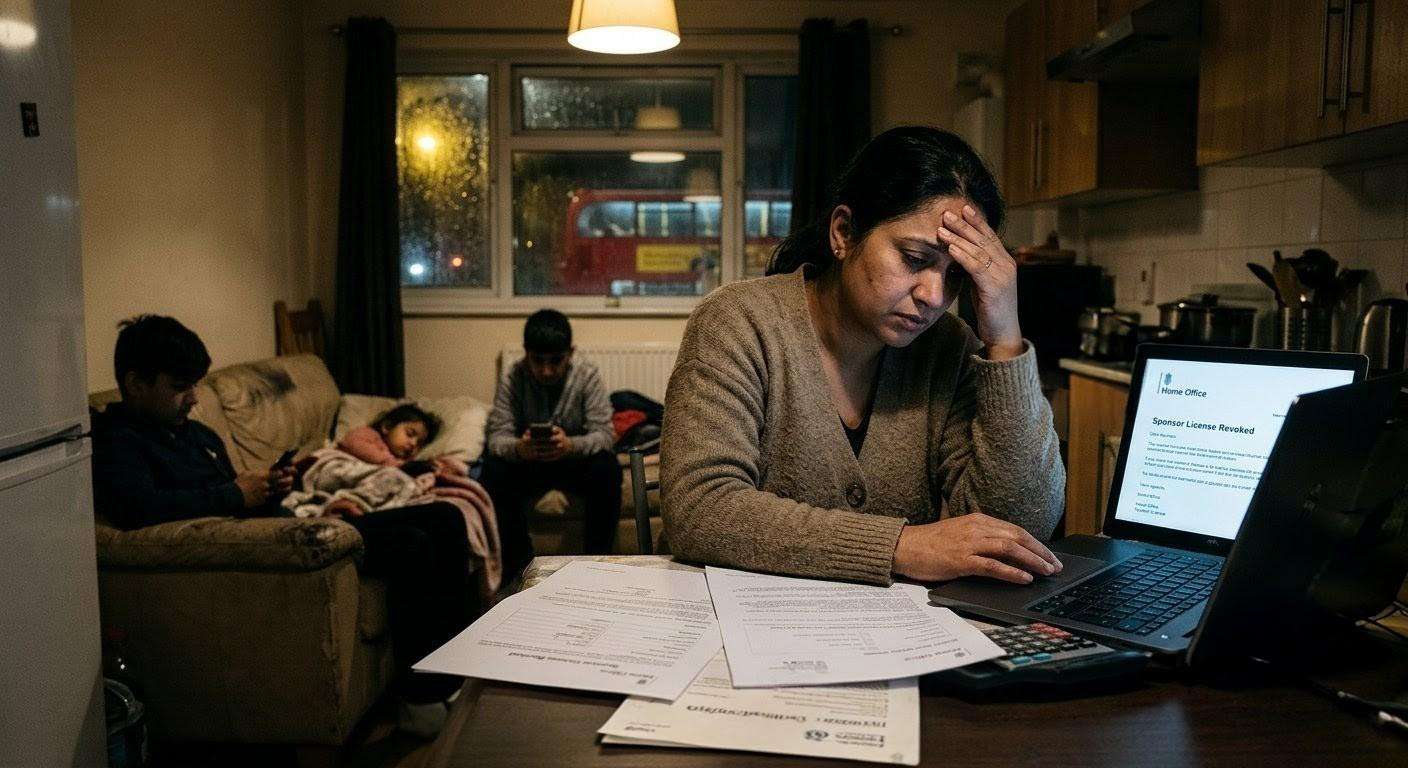
While the Home Office has doubled down on its "zero-tolerance" approach—revoking a record 3,000 sponsor licenses in 2025 alone—the fallout has birthed a predatory shadow economy. When a company’s license is stripped, the Certificate of Sponsorship (CoS) that anchors a worker’s legal right to stay is instantly voided. For the migrant, the clock starts ticking: 60 days to find a new sponsor or face deportation.
It is in this 60-day "death zone" that criminal brokers and rogue business owners are reaping millions. Sources close to affected families reveal that desperate workers, often with spouses and children in tow, are being extorted for "transfer fees" exceeding £20,000 to £25,000. These are not government fees, but illegal "points" charged by a new breed of visa-traffickers who sell the promise of a fresh CoS to those terrified of returning home in debt.
"They treat us like stock, not humans," one care worker told a journalist under the condition of anonymity. "When my first agency lost their license, a broker told me I needed £22,000 in cash within a week to move my family’s visa to a new care home. We had already paid £15,000 to come here. Now we are paying for the right to remain slaves."
The exploitation does not end with the payment. Once "bought" by a new company, these workers are frequently subjected to "on-call" shifts that never end. They are the invisible safety net for the UK care sector, summoned the moment a local staff member fails to show. Refusal is not an option; the implicit threat of losing their sponsorship—and thus their home—hangs over every hour of unpaid overtime.
Read more: UK ILR Pivot: Who Escapes the 10-Year Wait?
Read more: "Complete Fraudster Pack " UK's Care Visa
Read more: The UK Visa Collapse: Why Thousands of Healthcare Workers Are Fleeing
The human cost of this systemic failure has turned fatal. Reports are emerging of the ultimate price paid for this "never-ending stress." In one harrowing case that has sent shockwaves through the diaspora community, a young father working in the social care sector reportedly took his own life after his sponsor's license was revoked, leaving him with a £30,000 debt to lenders in his home country and no legal path to work in the UK. His death is a grim marker of a system that critics say prioritizes border statistics over basic human rights.
Legal experts warn that the government’s new "Visa Brake" and the tightening of salary compliance rules, effective April 2026, may inadvertently drive these practices further underground. Under the latest rules, sponsors must prove full salary payments in every single pay period, a move intended to stop "kickback" schemes where workers are forced to pay back half their wages in cash. However, for those already trapped in debt bondage, these rules often mean even less take-home pay as they struggle to satisfy both the Home Office and their exploiters.
"The system is currently designed to punish the victim for the crimes of the employer," a high-profile advocate for migrant rights told a journalist. "When a license is revoked because of employer fraud, the worker loses everything. They become easy prey for the next shark."
As the internal review of the overseas domestic worker visa drags toward its late 2026 conclusion, the question remains: how many more lives will be lost to the "60-day" countdown before the government addresses the criminal industry flourishing in the gaps of its own policy?
This report is the result of an independent investigation by Daily Dazzling Dawn. It is based on documented evidence and formal written complaints regarding numerous real-life incidents reported within the community."





.jpg)