





.svg)
The UK government has pushed back against criticism that it failed to immediately support US airstrikes on Iran, insisting that Britain must act according to its own national interests and learn from past military decisions.
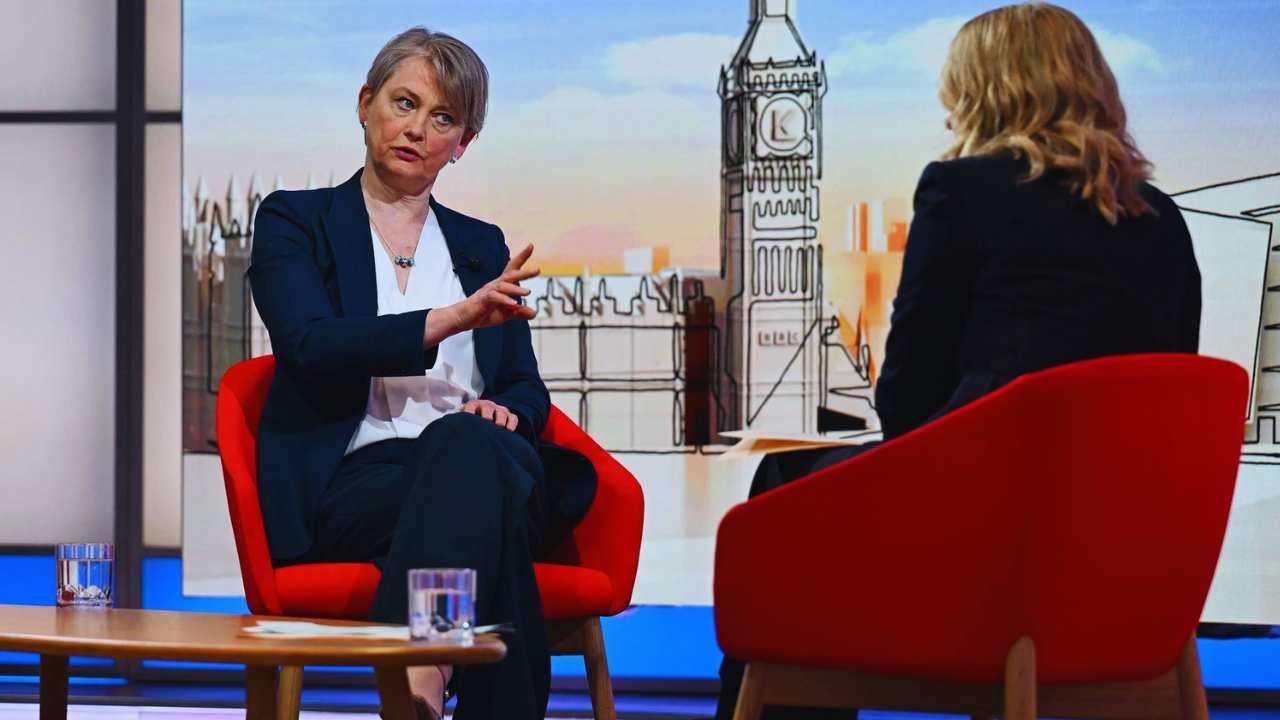
Home Secretary Yvette Cooper dismissed comments from former prime minister Tony Blair, who argued that the UK should have supported the United States from the beginning of the conflict and allowed American forces to use British airbases for operations.
Blair made the remarks during a private event on Friday, where he reportedly said the UK should stand firmly with its closest ally when security partnerships are tested. According to reports, he told attendees that if Britain relies on the United States for security, it should be prepared to support Washington when assistance is requested.
However, Cooper rejected that argument during interviews on Sunday political programmes, saying the UK must avoid blindly following the US into military conflicts. She said British leaders had a responsibility to consider the national interest first and to reflect on the lessons learned from the 2003 Iraq war before committing to any foreign intervention.
“There are some people who believe Britain should always agree with the United States no matter what happens, and others who believe we should never act with them again,” Cooper said. “Neither position is right. The responsibility of the prime minister is to act in the national interest of the British people.”
The debate comes as tensions have grown between UK Prime Minister Keir Starmer and US President Donald Trump over Britain’s response to the US-Israeli strikes on Iranian targets.
Trump has repeatedly criticised the UK government for not offering immediate support. In recent comments on social media, the US president suggested America did not need allies who joined a conflict after the outcome had already been decided.
Blair, who has faced criticism for decades over his decision to back the US-led invasion of Iraq in 2003, argued that the current situation with Iran was different. He reportedly said the proposed support would not have involved deploying large numbers of British troops, but rather logistical assistance such as refuelling and access to airbases.
A spokesperson for Blair later said his remarks were made at a private event and were not intended for public release.
Meanwhile, Iran has warned Britain against becoming more directly involved in the conflict. The Iranian ambassador to the UK, Seyed Ali Mousavi, said his country would consider any direct British participation in attacks alongside the US and Israel as grounds for self-defence.
He urged the UK government to be cautious and to avoid escalating the conflict further, adding that Iran believed Britain had learned important lessons from the Iraq war.
So far, the UK has allowed the United States to use some British bases for what officials describe as defensive operations. However, the government has stopped short of taking part in direct military strikes against Iranian targets.
The disagreement highlights ongoing tensions over how Britain should balance its close alliance with Washington while maintaining an independent foreign policy in a rapidly evolving global conflict.


.jpg)