





.svg)
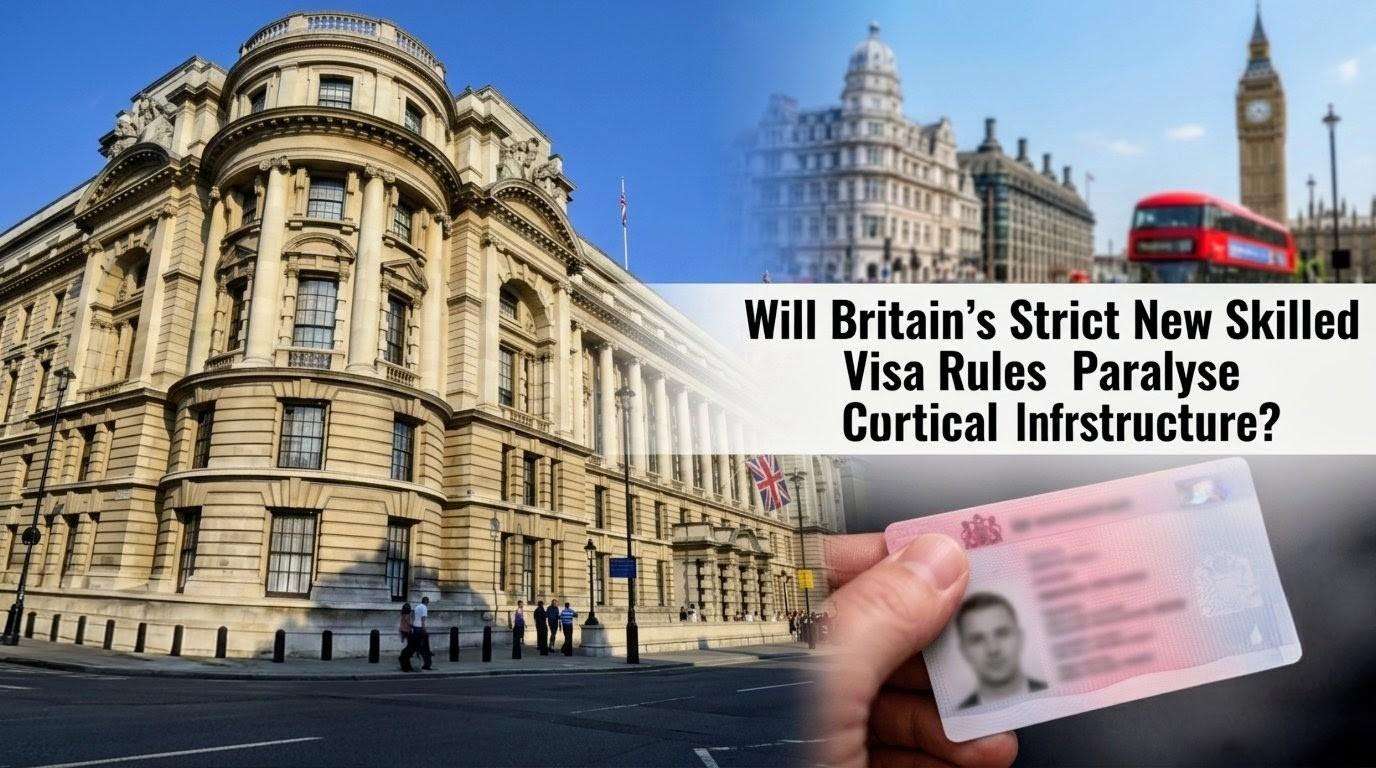
The contract Britain signed with two million migrant workers is being torn up overnight, plunging lives into limbo and threatening the very public services that welcomed them.
A DAILY DAZZLING DAWN ANALYSIS: THE COUNTDOWN TO A CRISIS- As dawn breaks over London, a silent panic is spreading through the flats and shared houses where nearly two million migrant workers—the nurses, software engineers, and care home staff who arrived post-Brexit—are waking to a different future. Home Secretary Shabana Mahmood’s policy to extend the path to Indefinite Leave to Remain (ILR) from five to a baseline of ten years is not just a political headline. It is a seismic, retroactive breach of trust that has ignited one of the largest Labour rebellions of the Starmer era, with nearly 50 MPs branding it “shameful,” “un-British,” and a “breach of trust.” But beyond Westminster’ fury lies a deeper, more imminent reality: a human and economic time bomb set to detonate in the coming months.
THE "BORISWAVE" IN LIMBO: WHAT HAPPENS NEXT? This policy uniquely targets the “Boriswave”—the 2.2 million people who arrived between 2021 and 2024 under the post-Brexit points-based system, with a clear promise of settlement after five years. Their path is now being extended retrospectively. The most severe impact will be on the 616,000 health and social care workers and their families, who now face a staggering baseline of 15 years. With new penalties for claiming benefits—adding up to a decade of extra waiting—a care worker facing hardship could be condemned to a 25-year march toward security. This isn't policy; it's purgatory.
The immediate consequence, whispered in staffing agencies and hospital HR departments, is a sudden freeze on long-term life decisions. The mortgage applications that were being prepared are now shelved. The small business loans for entrepreneurs on innovator visas are being withdrawn. Families are pausing plans to bring over elderly parents, knowing the timeline has vanished. The psychological shift from “settling” to “temporarily stranded” is complete.
THE COMING EXODUS AND LEGAL FIRESTORM- What happens next is predictable and already beginning. The first wave will be a skills exodus in late 2026 and 2027, precisely when the first major cohort was due to become eligible for ILR. Faced with another five-year minimum wait, highly mobile skilled workers in tech, finance, and academia will simply leave for Canada, Australia, or the EU—jurisdictions competing fiercely for their talent with clearer, faster pathways. The UK’s reputation as a reliable destination for global skill is being dismantled overnight.
Simultaneously, a historic legal challenge is being assembled. Leading immigration QCs, speaking on condition of anonymity, confirm that the retroactive application of the rules represents a “profound violation of legitimate expectation,” a key judicial review principle. Test cases are being sought among individuals who made life-altering decisions—buying property, having children, accepting lower salaries for the settlement prize—based on the five-year rule. The government could be tied in costly litigation for years.
THE DOMINO EFFECT ON PUBLIC SERVICES AND POLITICS- The rebellion led by MPs like Tulip Siddiq and Tanmanjeet Singh Dhesi is just the first political tremor. The deeper quake will hit public services. Hospital trusts and care home consortiums, already operating on razor-thin staffing margins, are conducting emergency risk assessments. Their business models, reliant on long-term international recruitment, are now untenable. The policy actively incentivizes their best-trained caregivers to leave the country.
Furthermore, the “earned settlement” criteria—requiring three years of sustainable employment, A-level English, and a clean government debt slate—creates a bureaucratic maze. It places migrants at the perpetual mercy of employers and a volatile job market. A redundancy could reset the clock. An NHS surcharge payment glitch could add years.
The government insists this is necessary to manage the unprecedented surge in arrivals and future access to benefits. But the strategic miscalculation is glaring. Instead of securing a loyal, integrated long-term workforce, the UK is creating a permanent transient underclass—millions of people working in the country but unable to securely build a life in it. The coming year won’t just see parliamentary votes and legal filings.