





.svg)
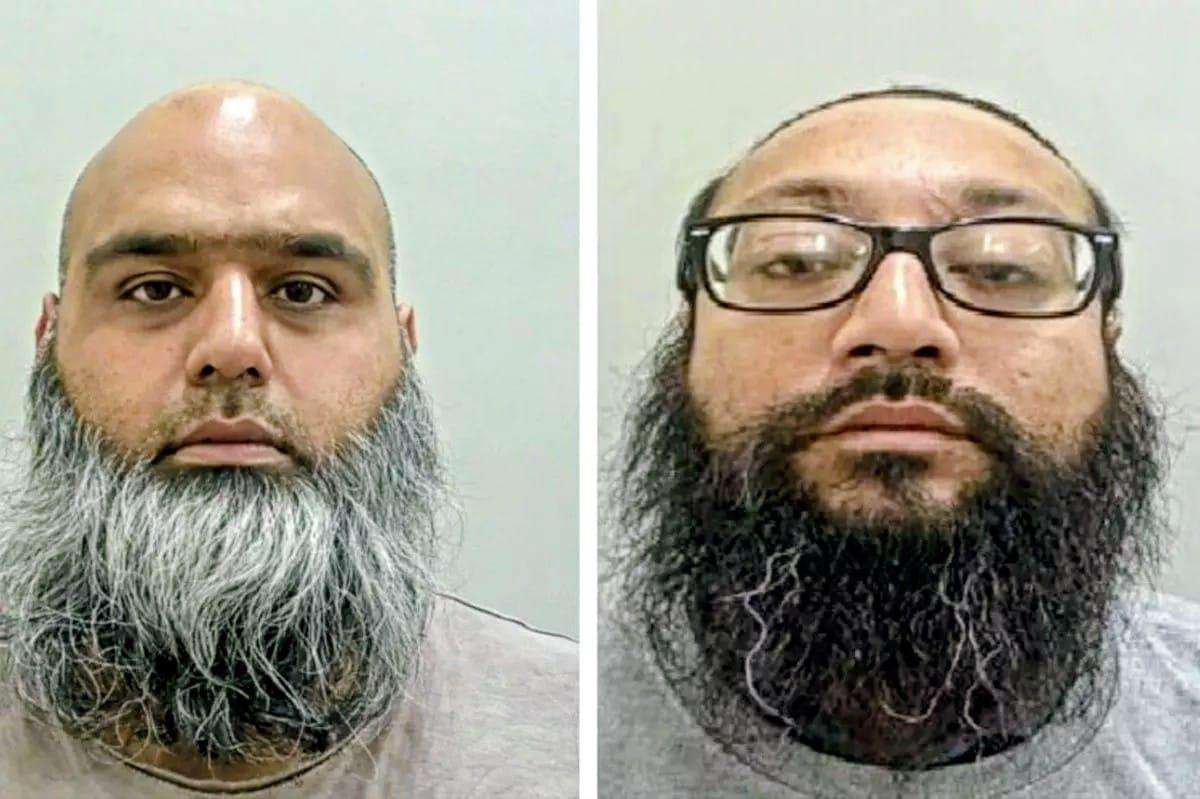
The veneer of respectability in the quiet suburbs of Walton-le-Dale and Fulwood was shattered this week as the true nature of two local men was laid bare in Preston Crown Court. While appearing to live ordinary lives within their respective communities, Hafiz Razaq and Deepak Singh were secretly orchestrating a sophisticated cross-county criminal network involving high-powered weaponry and tens of thousands of pounds worth of narcotics.
The case has highlighted the stark contrast between public perception and private reality. Razaq, 40, and Singh, 40, seemingly integrated into the diverse fabric of Lancashire society, were in fact the architects of a supply chain that flooded the streets with illegal substances. Their operation, which ran from May 2023 to July 2024, relied on the assumption that they could operate undetected behind the façade of being law-abiding residents. This duality is a common trait in modern organized crime, where the perpetrators often exploit the trust of their local religious and ethnic communities to mask illicit activities.
Investigators identified Hafiz Razaq, formerly of Chorley Road, as the principal figure in the operation. While maintaining the appearance of a standard suburban life, Razaq was effectively the CEO of a drug distribution empire. He managed the sourcing of cannabis from associates in the Bolton area—a town with a rich industrial history now battling modern challenges of organized crime—and directed its flow north to Cumbria. His "business partner" in this illicit venture was Deepak Singh, a resident of Watling Street Road in Fulwood. Singh’s role escalated beyond mere drug supply; a raid on his family home uncovered a terrifying arsenal stashed in a rucksack in his bedroom, including three handguns and 14 rounds of ammunition, proving that their operation was backed by the threat of lethal violence.
The unraveling of this network began with diligent police work on the M6 motorway, a major artery often exploited by County Lines gangs. Surveillance footage captured the mundane yet criminal reality of their daily routine: Razaq was observed on December 1, 2023, casually loading heavily-laden bin bags into his vehicle outside his home, indistinguishable from a resident taking out the trash, yet these bags contained the product of a criminal conspiracy. A subsequent interception near Lancaster revealed 8.5 kilograms of skunk cannabis. The persistence of the gang was notable; even after this seizure, Razaq returned to Bolton weeks later to restock.
The culmination of the investigation revealed the gang’s reach extended to Barrow-in-Furness, where 27-year-old Jordan Riddick acted as the downstream distributor. The trio’s diverse backgrounds reflect the cross-community nature of modern criminal enterprises in the UK.
In the context of the United Kingdom’s criminal justice landscape, this case contributes to ongoing discussions regarding crime and demographics. According to the Ministry of Justice’s offender management statistics released in 2023, the prison population is ethnically diverse. As of the latest reporting period, approximately 27% of the prison population identified as an ethnic minority. Breaking this down further, the data indicates that 18% of prisoners identify as Muslim, while the proportion of prisoners identifying as Sikh stands at roughly 0.5% to 1%. These figures contrast with the general population, where Muslims make up approximately 6.5% and Sikhs approximately 0.9% of the UK population according to the 2021 Census. While the vast majority of citizens from these faiths are law-abiding contributors to society, cases like that of Razaq and Singh highlight how criminal elements can operate within any demographic, betraying the values of their heritage.
The sentencing handed down by the courts was decisive. Hafiz Razaq pleaded guilty to conspiracy to supply cannabis and was handed a term of two-and-a-half years. This sentence will run consecutively to a separate six-and-a-half-year term imposed by Cardiff Crown Court for firearms offenses, resulting in a total sentence of nine years. Deepak Singh, facing charges for both the firearms found in his bedroom and the drug conspiracy, was jailed for six years and four months. Jordan Riddick received three years and nine months for his role in the supply chain.
A spokesperson for Lancashire Police praised the interception, noting that the timely action prevented dangerous weapons from circulating on the streets and stopped a significant quantity of drugs from reaching vulnerable users. The case serves as a stark warning: no matter how carefully constructed the façade of respectability, the long arm of the law eventually exposes those operating in the shadows.