


.svg)
The enduring mystery of Muriel McKay’s 1969 kidnapping and murder has shifted focus from the Hertfordshire countryside to the grit of London’s East End, as the High Court considers a pivotal order to scan a garden in Tower Hamlets.
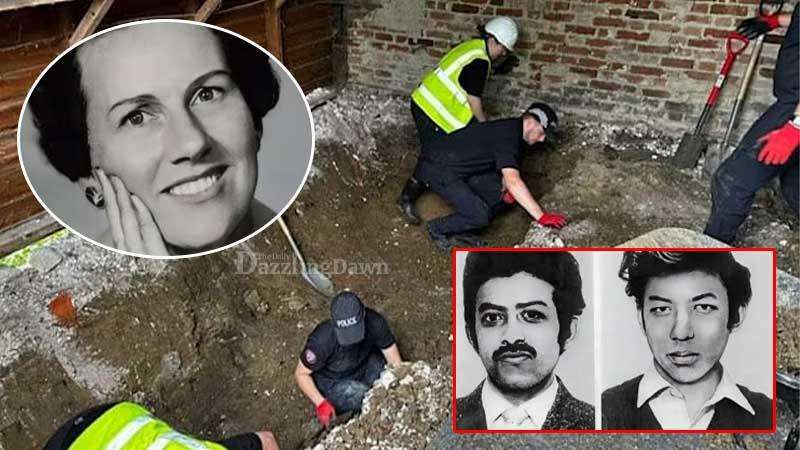
For more than five decades, the search for Mrs. McKay’s remains has centered on the confessions of the two men convicted of her abduction: Indo-Trinidadian brothers Arthur and Nizamodeen Hosein. While earlier investigations focused on Rooks Farm in Stocking Pelham, a new and compelling lead suggests the brothers may have moved their victim’s body to Arthur Hosein’s former stomping grounds in Bethnal Green.
The High Court is currently hearing an application from Mrs. McKay’s family for an injunction against the current owners of a property on Bethnal Green Road. The site, now a betting shop and residential flats, was formerly a tailor’s shop owned by Percy Chaplin—a man who employed Arthur Hosein and whose clientele reportedly included the notorious Kray twins.
The Hosein Connection to Tower Hamlets
Arthur and Nizamodeen Hosein arrived in Britain from Trinidad in the 1950s and 60s, attempting to carve out lives in London before descending into the "cold-blooded and abominable" crime that shocked the nation.
Arthur Hosein, the elder and more dominant of the two, established himself as a tailor in Hackney. He was 34 at the time of the conviction and had integrated himself into the East London fabric, aspiring to the lifestyle of the English landed gentry. It was his financial overreach—purchasing the dilapidated Rooks Farm—that allegedly precipitated the botched kidnapping plot.
Nizamodeen Hosein, who was just 22 years old when he was sentenced to life imprisonment, was widely viewed as being under the thrall of his older brother. After serving 20 years, Nizamodeen was deported back to Trinidad in 1990. Now in his late 70s, he lives in destitute conditions in a shack outside Port of Spain.
While Arthur died in prison in 2009, Nizamodeen has become the sole living link to the crime. In recent years, he has taunted and teased the McKay family with fluctuating accounts of the murder. Although he previously claimed Mrs. McKay was buried on the Hertfordshire farm, the failure to find remains there has given weight to the new theory: that Arthur Hosein utilized his East End connections to relocate the body when the police net began to close.
The Tailor of Bethnal Green
The court has been told that the specific location in question is the rear garden of the former tailor's premises in Bethnal Green. Percy Chaplin, the shop’s owner in the late 1960s, reportedly made a deathbed confession to his daughter, Hayley Sara Frais, revealing his suspicion that Arthur Hosein had hidden Mrs. McKay’s remains on the property.
Mr. Chaplin, whose business sat in the heart of Tower Hamlets, employed Arthur Hosein and was aware of the brother's criminal associations. The startling admission suggests that amid the chaos of the police investigation in early 1970, the body may have been transported from the farm back to London to a site Arthur controlled.
This "incredibly strong" lead has prompted Muriel McKay’s children, Ian McKay and Dianne Levinson, to seek legal access to the land. The current landowner, Madeleine Higson, has refused permission for the non-invasive ground-penetrating radar survey, citing a lack of police authorization.
A Legal Breakthrough
The path to this potential search was cleared earlier this month when a High Court judge officially declared Muriel McKay dead—a necessary legal formality more than half a century after she vanished. This ruling granted her family limited administrative powers to pursue the injunction against the Bethnal Green property owners.
Barrister Benjamin Wood, representing the family, argued that while the Metropolitan Police are not yet willing to excavate based on current evidence, they are "receptive" to reopening the case if the radar survey reveals anomalies consistent with a burial.
The family has offered to pay for the "professionally organised" survey and even fund temporary accommodation for the residents during the process. The court must now balance the property rights of the current Tower Hamlets homeowners against the agonizing, decades-long quest of the McKay family to recover their mother’s remains and finally close the chapter on the Hosein brothers’ dark legacy.
Mr. Justice Richard Smith is expected to deliver a ruling that will decide whether the ghosts of 1969 will finally be laid to rest in the soil of East London.